From the first call to a fixed price: how we scope a project
What happens between a short call and a fixed price, and what you click through before most of the work begins.

On this page
It starts with a short call about your business and a written scope with a fixed price. Then you click through a working prototype, and only after that does the build begin, with weekly demos. The same person stays on for fixes and changes after launch.
Four steps, in this order
Our work runs in four steps, and the order is what matters. The price is fixed before the build starts, and you click through a working version before the bulk of the work begins.
| Step | What happens | Worth knowing |
|---|---|---|
| Brief | A call and a written scope with a fixed price. | The price moves with the work, not with the hours. |
| Prototype | A clickable version you can try before we build the rest. | Clickable, like every demo in our work. |
| Build and launch | Weekly demos, then launch on your server or ours. | The lunch delivery bot and CRM were complete in 10 days. |
| Support | We stay on for fixes and changes after launch. | Eight days after launch, the school bot let students join several groups. |
The call, and who is on it
Step one is a short call about your business. That is all we need from you to start.
The person on the call is the person who will build the project. We keep the team small on purpose, so nothing gets lost between a manager and a developer.
We work remotely from Batumi, Georgia, on GMT+4, and the call can be in English or Russian. After it you get a written scope with a fixed price.
What sets the price
The price moves with the work, not with the hours, and the scope fixes it before the work starts. Each service has a starting price, a minimum time to launch and its own list of what moves the price:
| Service | Price | To launch | What moves the price |
|---|---|---|---|
| Websites | from $250 | from 1 week | How many pages and languages; calculators, catalogs and other interactive parts; an admin panel for editing; texts, photos and translation; integrations with a CRM, bookings or payments. |
| Telegram bots | from $100 | from 3 days | How many scenarios the bot handles; payments; an admin panel in the bot or on the web; integrations with your CRM, sheets or site; languages. |
| CRM and internal tools | from $500 | from 3 weeks | How many roles and screens; how many statuses and rules between them; integrations with a bot, site, payments or messengers; moving data from your spreadsheet or current CRM; reports and statistics. |
| AI tools | from $500 | from 2 weeks | What the AI has to read or produce; how accurate it must be, and who checks it; where it lives: Telegram, CRM or site; how many documents or messages a day; integrations with your data. |
If you want a rough sense of where your project lands before the call, go down the list for your service.
A prototype you can click
This is the step where you click through a working version of the project.
On the car wash brand site, the prototype never invented what it did not know: 42 red notes marked every figure and detail that had to come from the product owner.
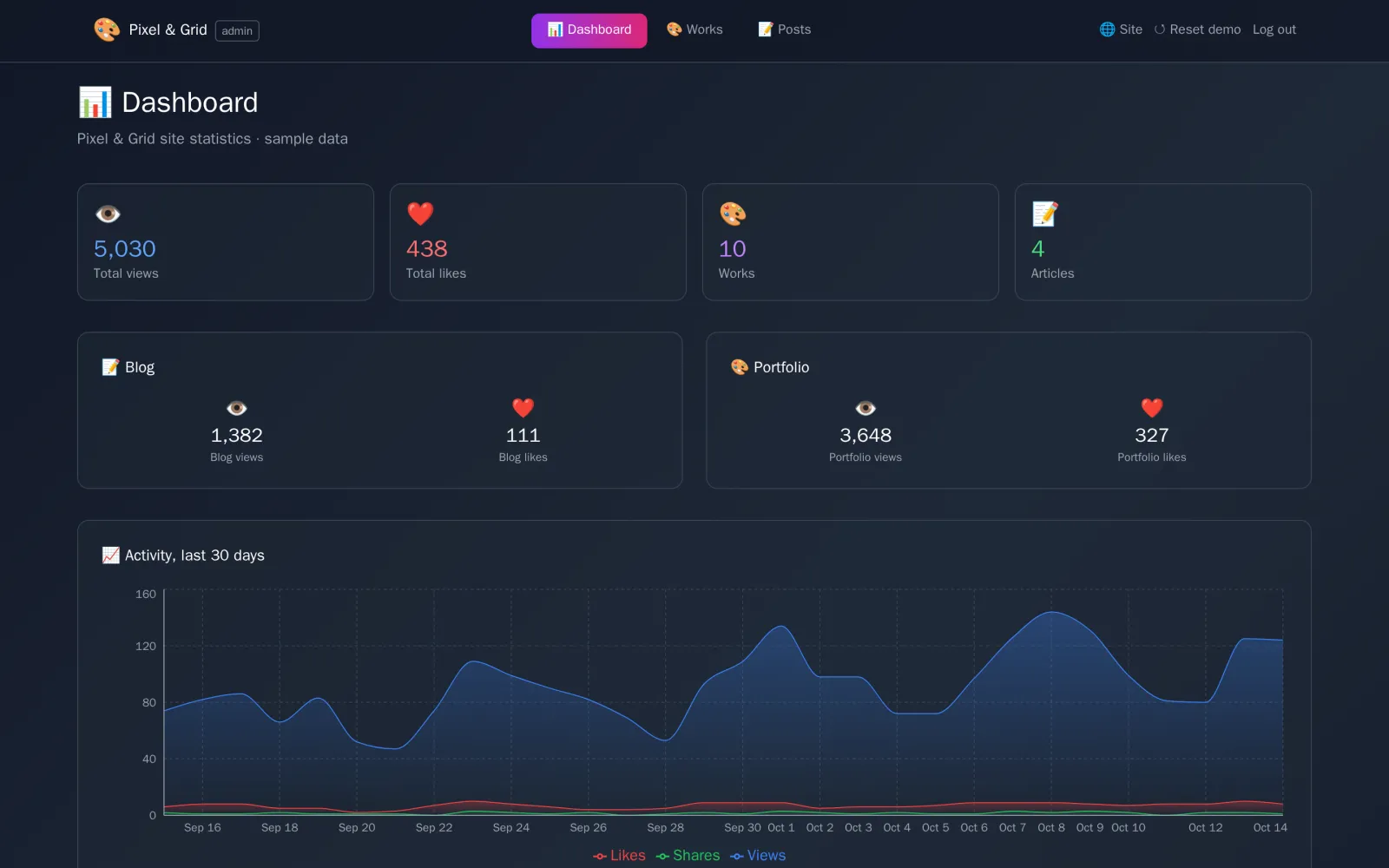
The demos in our work show what clicking through means. In the lunch delivery demo, the order board and the calendar work in the browser. In the design studio demo, a switch in the bottom bar opens the admin panel, and your edits last until you reload the page. In Pipey you can move deals, ask the AI panel for a draft and open documents.
The build, and what changes during it
After the prototype comes the build: a demo every week, and at the end the launch on your server or ours.
The lunch delivery project shows the pace. Work started on 3 October 2026, and the bot went live the same day. The order board, client list, statistics and broadcasts came the next day, weekly orders the day after, and in ten days the whole system was running.
Rules still change during the build. After the first real weekly order in that project, one of them did: accepting one day now accepts the whole week, and the client gets one confirmation.
In the bot for an English school, work began with the design on 10 August 2026, and the bot went live on 15 August. Two days before launch the payment model changed: a single weekly payment day left one group four days to pay after class and another only a few hours, so each class got its own payment cycle.
Sometimes the better move is to take something out. In the AI tender analysis project, a service that works only with Russian public procurement, the client tested the bot on real tenders, and that feedback shaped the specs. Two features, product search and margin calculation, were already built when we took them out on 6 August: they were not accurate enough to trust.
The co-founder of that service said this about working with us: “About five times I heard ‘this won’t work’, each time with a better option.”
After launch, the same person
We stay on for fixes and changes after launch, and they come from the same person who built the project.
The school bot did not stop at launch. On 23 August, eight days after it went live, students could join several groups.
The design studio site moved to a new platform on 25 February 2026, and months later, on 7 October, one pass covered stability and security. Editing a post no longer changes its address, so old links keep working. Removed and renamed posts now redirect visitors, and the page no longer jumps while it loads.
Questions
When do I get a fixed price?
After the first call you get a written scope with a fixed price, before the work starts.
What makes the price go up or down?
The work, not the hours. Each service has its own list: for a website it is the number of pages and languages, interactive parts, an admin panel, texts and translation, and integrations.
Can I see something before you build it?
Yes. You click through a working prototype first, the way you can click through the demos in our work.
Who will I talk to?
The person who will build your project. We work remotely from Batumi, in English or Russian.
What happens after launch?
We stay on for fixes and changes, from the same person who built it.
ZabSoft is a software company in Batumi. The person who scopes your project is the person who builds it.